Key Takeaways
- Remarketing vs retargeting is mostly about the channel.
- Retargeting usually means ads; remarketing often means email.
- Both depend on a past visit or purchase.
- Decide remarketing vs retargeting by audience size and goal.
- Cap frequency so people don't tire of you.
Ask five marketers about remarketing vs retargeting, and you'll get five different answers. Some say the terms are identical. Others insist on a strict split. Both camps have a point. The truth sits in the middle, and the confusion costs money when teams buy the wrong thing or measure the wrong result.
This guide gives you working definitions, comparisons, and realistic scenarios. In this blog, you'll learn what each term means, how the tactics work, and when one deserves your budget over the other.
Remarketing vs Retargeting in Plain Language
In remarketing vs retargeting talks, the words get swapped constantly, even by campaign pros. A clean working definition makes planning conversations much faster.
What Is the Difference Between Remarketing and Retargeting?
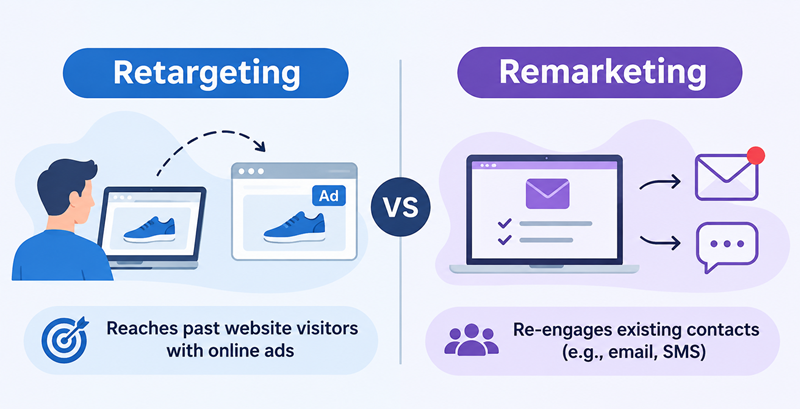
In everyday use, retargeting means showing ads to people who visited your site or app but didn't convert, usually through pixels or cookies. Remarketing leans toward re-engaging people you already know, often by email, using customer lists or CRM segments.
The line blurs because Google Ads uses "remarketing" for what most others call retargeting. So when you read retargeting vs remarketing arguments online, check which platform the author means. The remarketing vs retargeting split is really about data source and channel, not goals.
Remarketing Meaning in Practice
The remarketing meaning most practitioners use involves reconnecting with people who gave you contact details or already bought. Think of a cart reminder email.
On Google's platform, the remarketing meaning stretches wider to include display and search ads shown to past visitors.
Retargeting Meaning in Practice
The retargeting meaning is simpler. Ads follow an unknown visitor after they leave. Someone reads your pricing page, closes the tab, and later sees a banner for that plan on a news site.
That's the retargeting meaning in action. No email address is needed, which suits visitors who never share contact details.
How Retargeting vs Remarketing Works Behind the Scenes
Both sides of remarketing vs retargeting start with a signal that someone showed interest. What changes is how you store it and where you reach the person next.
How Do Remarketing and Retargeting Work?
A tracking pixel or app SDK records an action, such as viewing a product, and adds the visitor to an audience. For retargeting, an ad platform then shows ads to that audience across sites and apps. For remarketing by email, a customer record triggers a message based on behavior or purchases.
Is Remarketing the Same as Retargeting?
Not strictly, but close enough that many teams run them as one program with two channels. When comparing retargeting vs remarketing proposals, ask which remarketing meaning and retargeting meaning the vendor uses.
Then get the channel, audience source, and lookback window in writing.
Building a Remarketing Strategy and a Retargeting Strategy
Any remarketing vs retargeting plan starts with segments, not creative. Group people by how close they are to buying, then give each group a different message.
A Remarketing Strategy Built on Lists
A solid remarketing strategy uses first-party data such as past buyers, subscribers, and lapsed customers. Send replenishment reminders, loyalty offers, or cross-sells that match what each person bought.
Because you already have history and permission, a remarketing strategy can be quieter and more personal than ads.
A Retargeting Strategy Built on Behavior
A good retargeting strategy sorts visitors by depth of interest. Someone who read one blog post needs a gentle reminder. Someone who added to cart needs a direct nudge, perhaps free shipping.
Set a lookback window that fits your sales cycle, and exclude people who already bought. A sharp retargeting strategy also limits how often one person sees the same ad.
Remarketing vs Retargeting Compared at a Glance
This table sums up retargeting vs remarketing differences. The remarketing meaning and retargeting meaning shift by vendor.
| Factor | Remarketing | Retargeting |
|---|---|---|
| Typical channel | Email, SMS, CRM-driven ads | Display, social, video ads |
| Audience source | Known contacts and customers | Anonymous site or app visitors |
| Main goal | Repeat sales and loyalty | Recovering lost visitors |
| Main risk | Over-emailing | Ad fatigue |
What Are the Main Examples of Remarketing and Retargeting?
These are illustrative scenarios, not client results. They show how remarketing vs retargeting plays out in practice.
An online bookstore emails a customer a month after a purchase with titles from the same author. That's remarketing. A traveler browses flights to Denver, leaves, and then sees a fare ad on a recipe site. That's retargeting.
In retargeting vs remarketing terms, a B2B software firm might do both. It retargets pricing-page visitors with a demo offer and emails trial users setup tips. Its remarketing strategy and retargeting strategy cover different people.
When Should Businesses Use Remarketing Instead of Retargeting?
Choose based on what you already know about the person. With an email address and purchase history, remarketing is usually cheaper and more relevant than paid ads.
Build your remarketing strategy when your list is healthy, products get repurchased, or budgets are tight. Lean on a retargeting strategy when most traffic is anonymous. In retargeting vs remarketing decisions, the data you own should lead.
Conclusion
Remarketing vs retargeting looks like a vocabulary quarrel, but it shapes real budget choices. The retargeting meaning centers on ads for anonymous visitors, while the remarketing meaning centers on known contacts, often by email.
Most healthy programs use both, with clear audiences and frequency limits. Before approving any remarketing vs retargeting plan, ask which channel, data source, and time window it covers. Do that, and you'll avoid paying twice to reach the same people.
Frequently Asked Questions
How long should a lookback window be?
Match it to your buying cycle. Impulse purchases may need days, while pricier items may need weeks. Review conversion data regularly to find the window that captures the most relevant buyers.
How often should I show the same ad?
Cap frequency, because repeating one ad too often wears people out. Test a low daily limit and raise it only if conversions justify it. Refresh your creatives regularly to keep your audience engaged.
Do privacy rules affect remarketing vs retargeting?
Yes. Consent requirements, browser limits, and platform policies all restrict tracking. Build first-party data, such as email lists, so your plans don't hinge on one cookie.
Does this work for B2B?
Often. Longer B2B buying cycles suit retargeting key pages plus email follow-up. It also helps keep your brand visible while decision-makers compare solutions and evaluate vendors.
How do I measure remarketing vs retargeting success?
Track conversions and incremental lift, not just clicks. Compare against a holdout group that never sees the ads. Also monitor cost per acquisition, lead quality, and the revenue generated by each campaign.